
Talking to Children About a Sporting Hero’s Suicide
When a beloved sports figure dies by suicide, the shock ripples far beyond the headlines. For children who look up to athletes as superheroes, the news can be confusing, scary, and deeply upsetting. As a parent, teacher, or caregiver, knowing how to talk about such a sensitive issue may feel overwhelming — but these moments offer a powerful opportunity to have honest, age-appropriate conversations about mental health, grief, and resilience.
Why Conversations about Suicide Matters
Children often idolise athletes for their strength, skill, and determination. When someone they admire dies by suicide, it can shake their sense of security and raise tough questions. Was the hero in pain? Why didn’t anyone help? Could this happen to someone else I love?
Avoiding the topic doesn’t protect them — it leaves them to fill in the gaps with worry, misinformation, or silence. Talking openly can help children feel safer, better understand mental health, and learn how to seek help when they or someone they love is struggling.
Tailoring Discussion of Suicide to Your Child’s Age
Young Children (Under 8)
Keep explanations simple and reassuring. Use language they understand, avoiding graphic details.
“Sometimes people feel very, very sad or confused, and they don’t know how to ask for help. That happened to [Name], and it made their body stop working. It’s really sad, but we can talk about it.”
Let them ask questions, and answer honestly but gently. Reassure them they are safe, and that if they ever feel sad or confused, they can always talk to you.
Tweens (8–12)
At this age, children are beginning to understand complex emotions and are likely to hear about the news from friends or social media.
“You might have heard that [Athlete] died. It was suicide, which means they were dealing with a kind of pain that isn’t always visible. They might have felt very hopeless and didn’t know how to get help.”
Encourage conversation. Ask how they’re feeling and what they’ve heard. This is a good time to introduce the concept of mental health as part of overall well-being, just like physical health.
Teens (13+)
Teenagers often have a deeper understanding of mental health but may feel pressure to hide their emotions or manage struggles alone.
“It’s heartbreaking that someone so talented and successful could feel so alone. It reminds us that anyone can struggle, and that mental health is just as important as physical health.”
Create space for reflection, not just explanation. Ask open-ended questions like:
- “How are you feeling about this?”
- “What do you think it says about the pressures athletes face?”
- “Do you think people get enough support when they’re struggling?”
Remind them that asking for help is a sign of strength, not weakness — and that support is always available.
Things to Avoid Saying Regarding Suicide
- “They had everything. Why would they do that?”
This oversimplifies mental health and may make a child feel guilty for struggling despite “having it good.” - “They were selfish.”
Suicide is often the result of deep psychological pain or illness, not a moral failing. - “Let’s not talk about it.”
Silence can make children feel ashamed or confused. Encourage open, ongoing dialogue.
How to Support Your Child
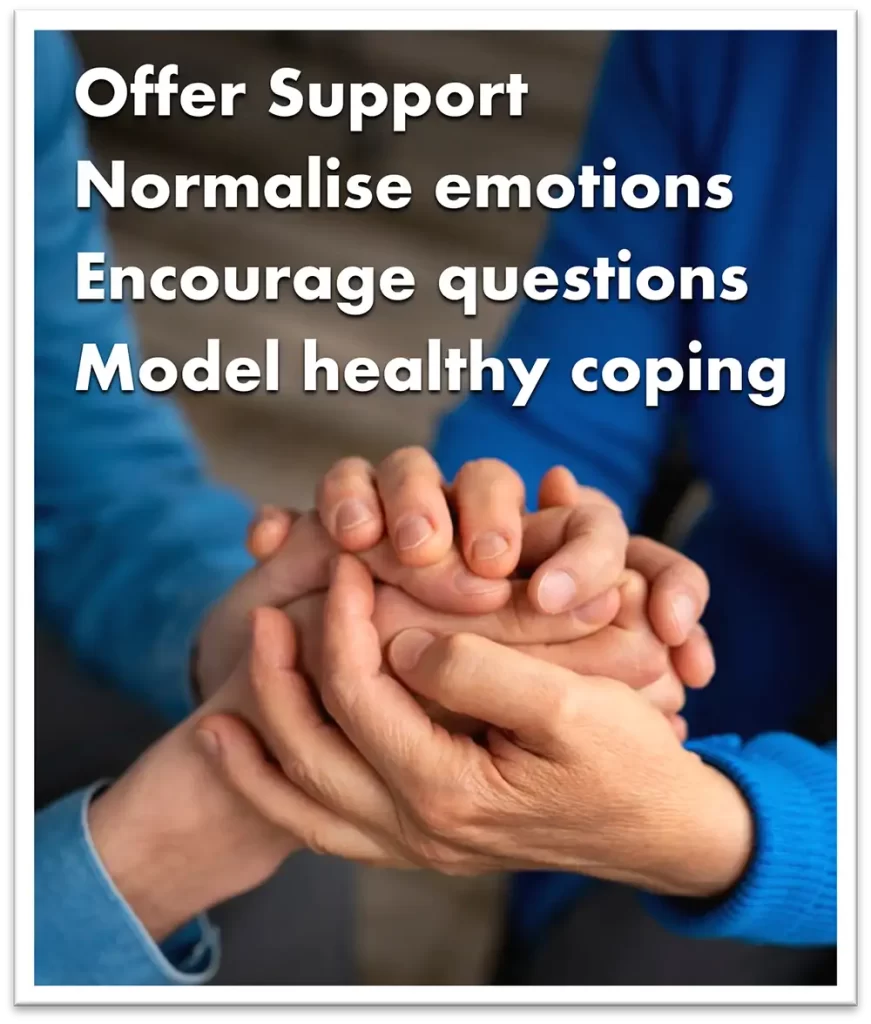
- Normalise emotions. Let them know it’s okay to feel sad, angry, confused, or numb.
- Stick to routines. Normalcy brings comfort during emotionally turbulent times.
- Watch for signs of distress. Sleep troubles, irritability, withdrawal, or changes in appetite could signal the need for extra support.
- Encourage questions. And don’t worry if you don’t have all the answers — honesty builds trust.
- Model healthy coping. Talk about your feelings too, and show them it’s okay to seek help.
A Final Note: Talk About Hope
Amid the grief, highlight the helpers. Share stories of athletes and people who have opened up about their mental health and found healing. Reinforce that there is always help, always hope, and always someone who cares.
Talking about suicide is hard — but silence can be far more damaging. By opening the door to these conversations with honesty, love, and compassion, we’re not just protecting our children from fear. We’re teaching them empathy, emotional intelligence, and the lifelong strength of vulnerability.
Blog written by Alana Maley-Berg: Registered Psychologist
If you’d like to find out more about One Central Health, contact us today via our enquiry form or by calling (08) 9344 1318.
ALL Images Courtesy of FREEP!K/Magnific