

Is My Child Just a Late Talker?
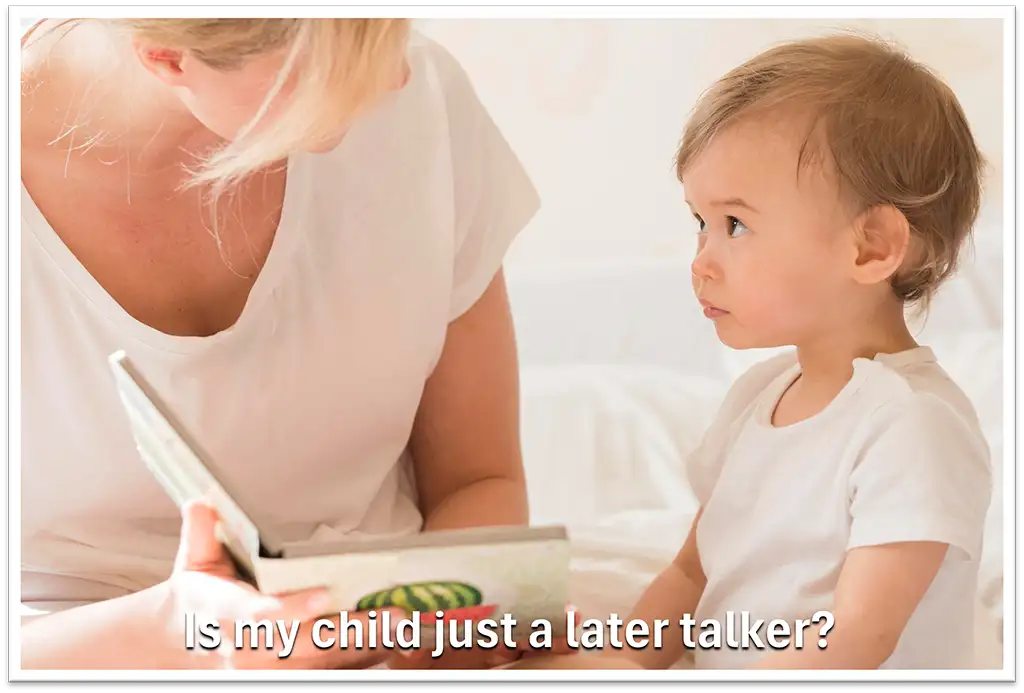
You’ve probably heard it before: “He’ll come good.” Or “She’s just taking her time.” And maybe she is. But here’s what the research actually says — and why it matters.
First — what is a late talker?
A late talker is a toddler who has fewer words than most kids their age, without any obvious reason like a hearing problem or a known diagnosis. It’s more common than many parents realise — around 10–15% of toddlers show delayed language development (Nouraey et al., 2021).
Will they just catch up on their own?
Some will. But it’s not as simple as waiting and hoping.
Some late talkers do catch up on their own. But others continue to struggle, or are later found to have an ongoing language disorder. The tricky part is that in the early years, it’s very hard to tell which group a child belongs to (Perry et al., 2023).
Even children who seem to catch up don’t always close the gap completely. As a group, late talkers tend to score lower than their peers on language tasks well into their teenage years (Rescorla, 2011) — even when they appear to be doing fine. And up to 40% of late talkers may not catch up at all (Rescorla, 2011).
So why not just wait?
Because timing matters. The first five years of life are when the brain is most ready to learn language — which is why getting support early makes the biggest difference (Andrews, 2018).
Waiting can also mean missing signs of something that needs attention sooner. Late talking can affect a child’s friendships, confidence, and readiness for school — and for some children, the effects can last well beyond the early years (Capone Singleton, 2018).
What should I do if I’m worried?

Trust your gut. You know your child best.
Getting a speech pathology assessment doesn’t mean something is seriously wrong. It just means you’ll know where your child is at — and what, if anything, can help. Even if everything turns out to be fine, you’ll walk away with practical tips to support your child’s talking at home, right now.
Blog Written by Joy James – Speech Pathologist
References
- Andrews, B. (2018). What’s wrong with “wait and see”? The Speech Dynamic.
- Capone Singleton, N. (2018). Late talkers: Why the wait-and-see approach is outdated. Pediatric Clinics of North America, 65(1), 13–29.
- Nouraey, P., et al. (2021). Late language emergence: A literature review. Sultan Qaboos University Medical Journal, 21(2), e182–e190.
- Perry, L. K., et al. (2023). Late bloomer or language disorder? Developmental Science, 26(4), e13342.
- Rescorla, L. (2011). Late talkers: Do good predictors of outcome exist? Developmental Disabilities Research Reviews, 17, 141–150.
If you’d like to find out more about One Central Health, contact us today via our enquiry form or by calling (08) 9344 1318.
ALL Images Courtesy of FREEP!K/Magnific