
Bullying and Disability: Why there’s a connection

Sadly, people with disabilities are quite often targeted by bullies due to factors like physical vulnerability, social skill challenges, and intolerant environments that often lack peer support and understanding. Bullies may target differences in appearance or behaviour, while certain health conditions can also increase risk.
A key issue is the lack of education about people with disabilities, which exacerbates the problem and can leading to social exclusion and targeted harassment.
Unfortunately, children with disabilities are disproportionately affected by bullying and are often less likely to be believed when they disclose it.
Research shows that having a disability and being bullied significantly increases the risk of later mental health challenges, including anxiety, depression, and suicidal ideation. National data reflects the scale of the problem—Children and Young People with Disability Australia (CYDA) reported in 2024 that 75% of students with disability had been bullied and 72% excluded from school activities, with rates rising from their 2022 findings. Reports included verbal abuse, physical assaults, sexual and online harassment, and social exclusion, with students describing experiences of being spat on, mocked, threatened, or groped because of their disability.
This issue is particularly pressing given the growing number of young Australians living with disability. According to the 2022 Survey of Disability, Ageing and Carers, 946,300 children and young people aged 0–24 years had a disability—an increase from 8.3% in 2018 to 13.9% among those aged 15–24.
Bullying not only affects students’ emotional wellbeing but also their relationship with education, with many associating schools with shame and failure, which can lead to disengagement or school refusal. Without appropriate support, these experiences contribute to long-term adverse outcomes, including poor mental health, social isolation, and an elevated risk of self-harm.
What are some of the issues around bullying?
Vulnerability and differences
- Physical vulnerability:
Bullies may see individuals who are physically smaller or less able to defend themselves as easy targets.
- Social and communication differences:
Challenges with social skills or a different way of communicating, as seen in some conditions like autism, can lead to misunderstandings and make individuals more likely to be targeted.
- Behavioural differences:
Differences in how a person reacts to distress or other behaviours can sometimes be misinterpreted and trigger aggression from others.
- Visible and “obvious” disabilities:
Individuals with more visible disabilities are often more likely to be singled out than those whose disabilities are invisible.
Environmental and societal factors
- Intolerant environments:
A lack of understanding or acceptance of people with different abilities within schools and the wider community creates an environment where bullying can thrive.
- Lack of education and empathy:
Bullies often lack understanding and empathy for people with disabilities, which can lead them to target differences. This is especially true for specific health conditions, such as allergies, where bullying can involve intentional exposure or teasing about medical needs.
- Social exclusion:
People with disabilities often experience social exclusion, which can make them more vulnerable to bullying and harassment.
- Lack of support:
Inadequate support systems, both from peers and school staff, fail to prevent or properly respond to bullying behaviour.
Specific health conditions
- Health impairments: Conditions such as epilepsy, food allergies, or diabetes can put individuals at a higher risk of being bullied due to teasing, social exclusion, or targeted harassment.
Why is support necessary?
Ongoing bullying can severely impact children with disabilities by disrupting emotional regulation, hindering academic progress, limiting friendships and social inclusion, and making it harder for them to recognise or report bullying, which without support increases the risk of anxiety, depression, school refusal, low self-esteem, self-harm, and trauma responses.
How can One Central Health support?
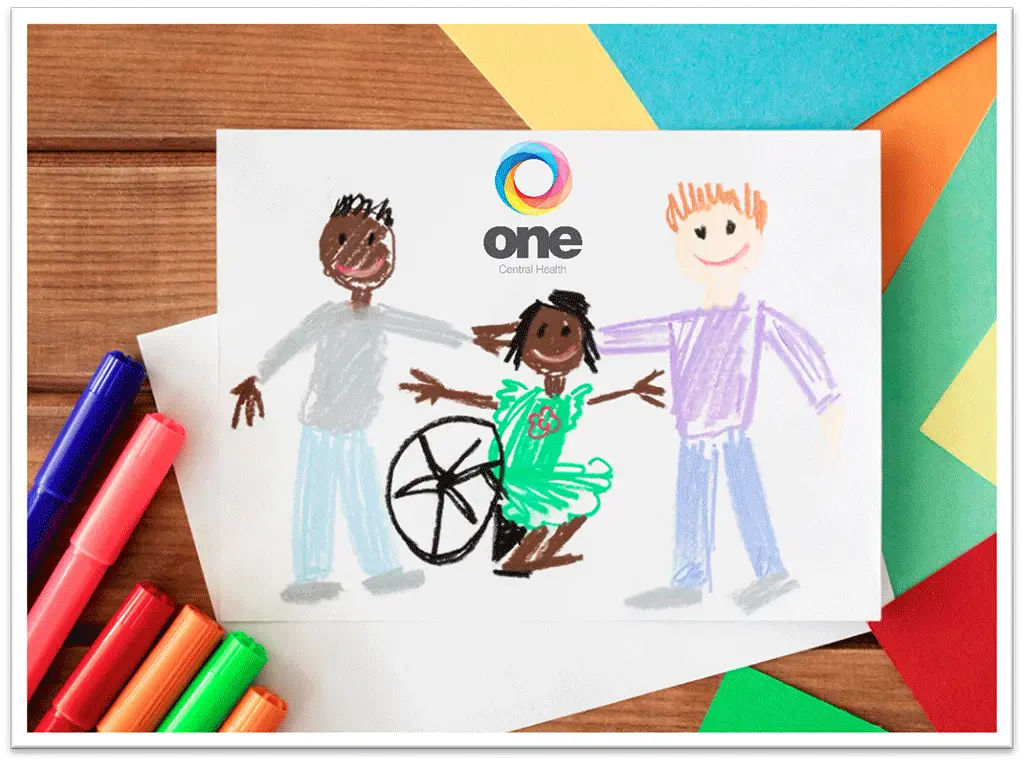
One Central Health can provide a variety of supports, or interventions for clients, their families and schools. These include:
Psychological Support
These can be tailored to the client’s needs and is very crucial to support their mental health. Utilising evidence-based psychological treatment, psychological support can assist with reducing internalising symptoms and develop assertiveness and coping strategies.
Social Skills Training
Focuses on recognising social cues, making and keeping friends, assertive communication and conflict resolution
Support for Parents and Families
Training parents/families can enhance intervention effectiveness and can include coaching on responding to disclosure, supporting social skill development at home.
Supporting Educational Institutes/Schools
By prompting healthy friendships and behaviours this can reduce bullying in schools. This includes providing support to schools in general, staff training and consistent responses to bullying and targeted interventions for at-risk students.
Blog written by Zeynep Erturk
ALL Images Courtesy of FREEP!K
If you’d like to find out more about One Central Health, give us a call today on (08) 9344 1318.