
Why It’s Important for Kids to Do Chores at Home (Including Clinical and Developmental Benefits)
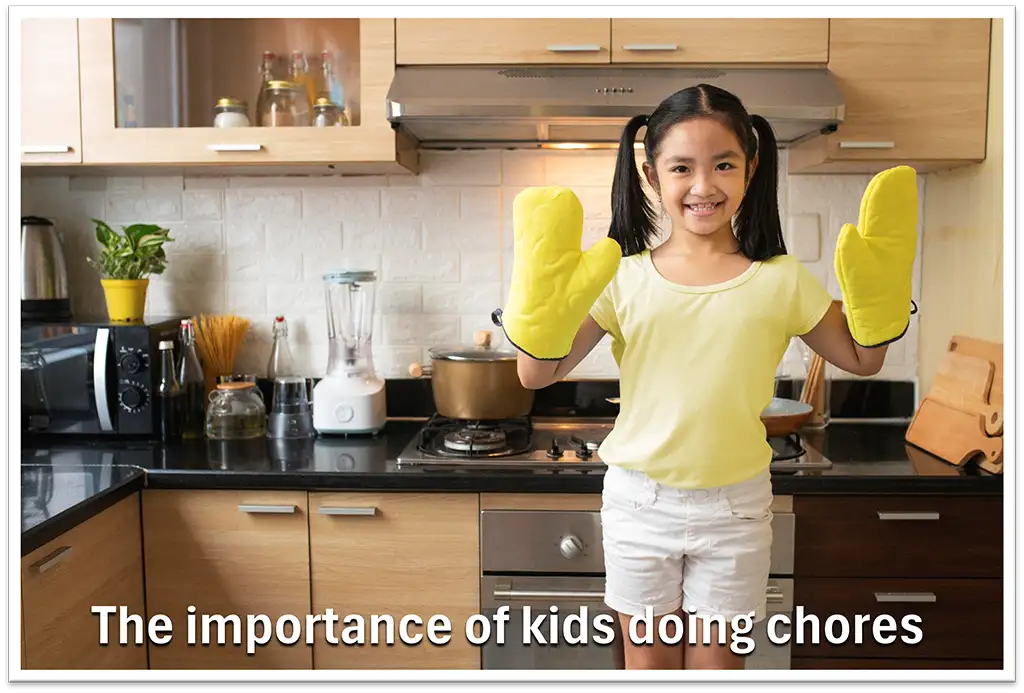
In many households, chores are often seen as a simple way to keep things tidy—but their value goes far beyond a clean kitchen or a made bed. Giving children regular responsibilities at home plays a powerful role in their development, shaping not just practical skills, but also emotional wellbeing, cognitive growth, and long-term mental health outcomes.
Building Responsibility and Accountability
When children are assigned chores, they learn that their actions matter. Completing tasks like setting the table, feeding a pet, or putting away laundry helps them understand responsibility. Over time, they begin to take ownership of their duties and recognise that others rely on them. This early sense of accountability supports the development of executive functioning skills such as planning, organisation, and follow-through.
Teaching Life Skills
Chores provide hands-on opportunities to learn essential life skills. Cooking simple meals, cleaning, organising, and managing time are all abilities children will need as adults. Introducing these skills early helps children feel more prepared and capable as they grow older, rather than overwhelmed when they eventually need to manage things independently.
Boosting Confidence and Independence
There’s a strong sense of pride that comes from completing a task successfully. When children contribute to the household, they feel valued and capable. This builds self-esteem and encourages independence. Even small achievements reinforce a sense of competence, which is a key protective factor against anxiety and low self-worth.
Encouraging Teamwork and Family Connection
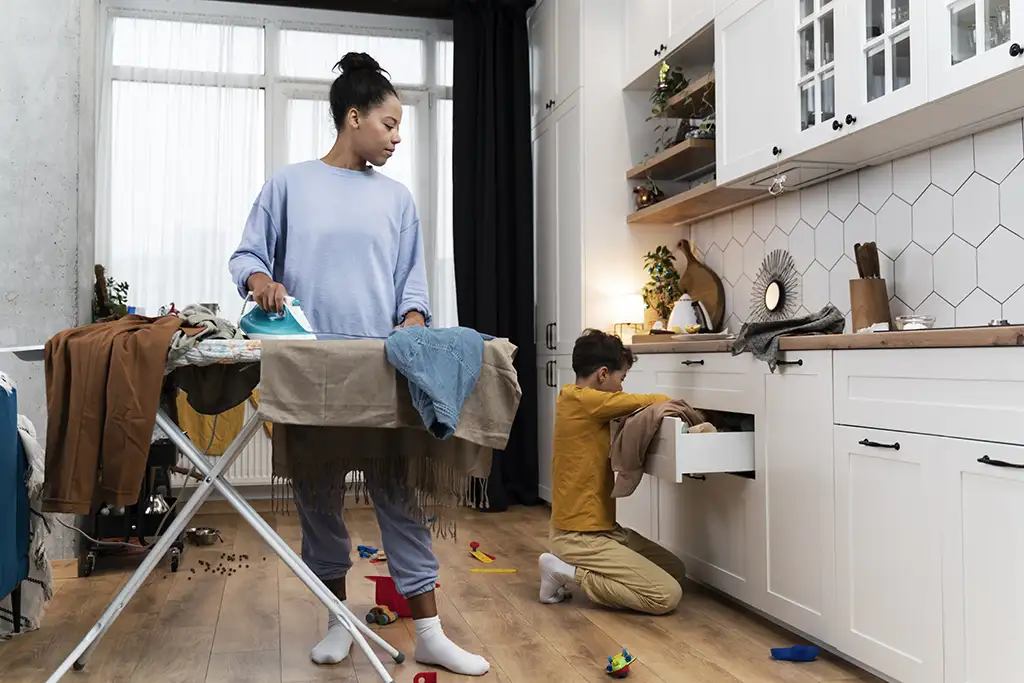
Chores help children see that running a home is a shared effort. Instead of viewing parents as solely responsible, kids learn that everyone plays a role. This fosters cooperation, empathy, and social awareness—important components of emotional intelligence.
Clinical and Developmental Benefits
The clinical and developmental benefits of children doing chores at home are well-supported in psychology and child development research. Beyond helping around the house, chores act as structured, real-life “practice opportunities” for key brain, emotional, and behavioural systems.
Here are the most important clinically relevant benefits:
Supporting Executive Function Development
From a clinical perspective, chores are highly effective in strengthening executive functioning—the brain-based skills responsible for planning, working memory, attention, and self-regulation. Tasks like following a sequence (e.g., clearing the table, then wiping it down) help children practise organisation and task completion. These skills are particularly important for academic success and are often targeted in children with ADHD or learning difficulties.
Chores strengthen executive functioning, which includes skills like planning, organisation, working memory, and task completion.
· Following multi-step tasks (e.g., clean room → put toys away → make bed)
· Learning sequencing and prioritisation
· Improving attention and persistence
These skills are critical for school readiness and are often targeted in children with attention difficulties.
Enhancing Emotional Regulation
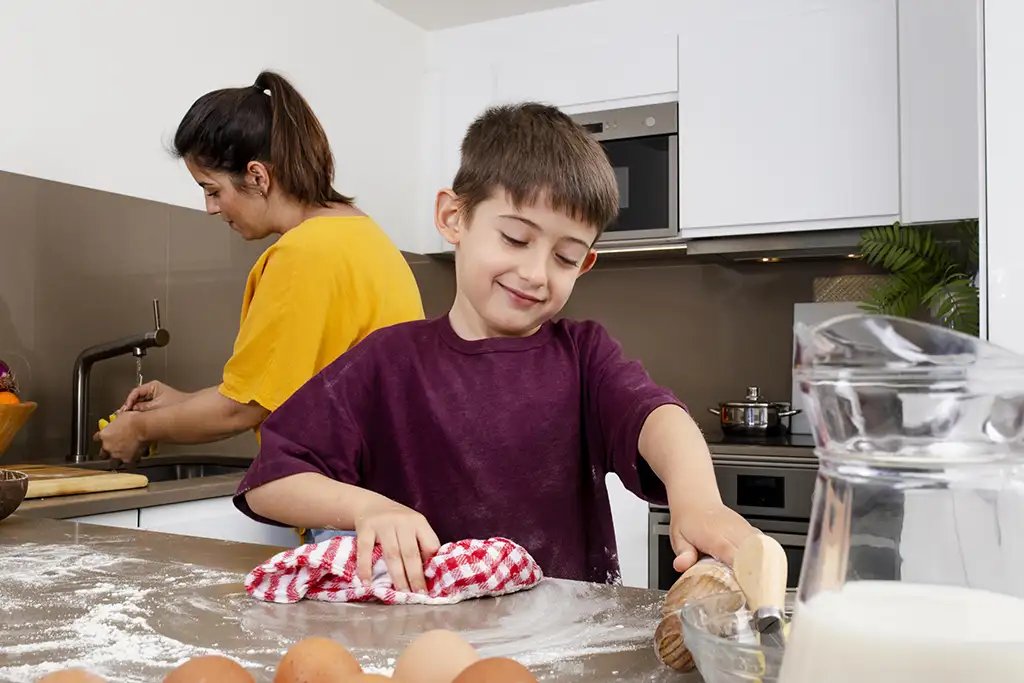
Routine responsibilities provide structure and predictability, which are essential for emotional regulation. Children who engage in regular chores often develop better frustration tolerance and patience. Completing tasks that are sometimes boring or challenging helps build resilience and coping skills, reducing emotional reactivity over time.
Chores naturally involve effort, repetition, and sometimes boredom—this is valuable.
· Builds tolerance for frustration
· Teaches children to persist through non-preferred tasks
· Supports self-regulation and impulse control
Over time, this reduces emotional outbursts and increases resilience.
Promoting a Sense of Agency and Control
Clinically, a sense of control over one’s environment is linked to improved mental health outcomes. When children are given meaningful responsibilities, they experience a sense of agency—feeling that they can influence their surroundings. This is especially beneficial in reducing symptoms of anxiety, where children may otherwise feel powerless or overwhelmed.
Children who contribute to their home develop a stronger sense of agency—the belief that their actions have an impact.
· Promotes confidence and autonomy
· Reduces feelings of helplessness (linked to anxiety)
· Encourages proactive behaviour rather than avoidance
Reducing Anxiety and Behavioural Issues
Research in child psychology suggests that children who contribute to the household tend to show fewer behavioural problems. Structured chores can reduce oppositional behaviour by providing clear expectations and routines. Additionally, contributing to the family can decrease anxiety by reinforcing a sense of belonging and stability.
Structured responsibilities and predictable routines are clinically beneficial.
· Provides stability and clear expectations
· Reduces oppositional behaviours
· Strengthens a sense of belonging within the family
Children who feel useful and included tend to show fewer behavioural concerns.
Supporting Sensory and Motor Development
For younger children, chores can support fine and gross motor skills, as well as sensory integration. Activities like sweeping, sorting laundry, or washing dishes engage coordination, hand strength, and body awareness—important for overall physical and neurological development.
Many chores involve physical interaction with the environment.
· Fine motor skills (e.g., folding clothes, sorting items)
· Gross motor skills (e.g., sweeping, carrying items)
· Sensory processing (touch, movement, coordination)
These contribute to overall neurological development.
Strengthening Family Systems and Attachment
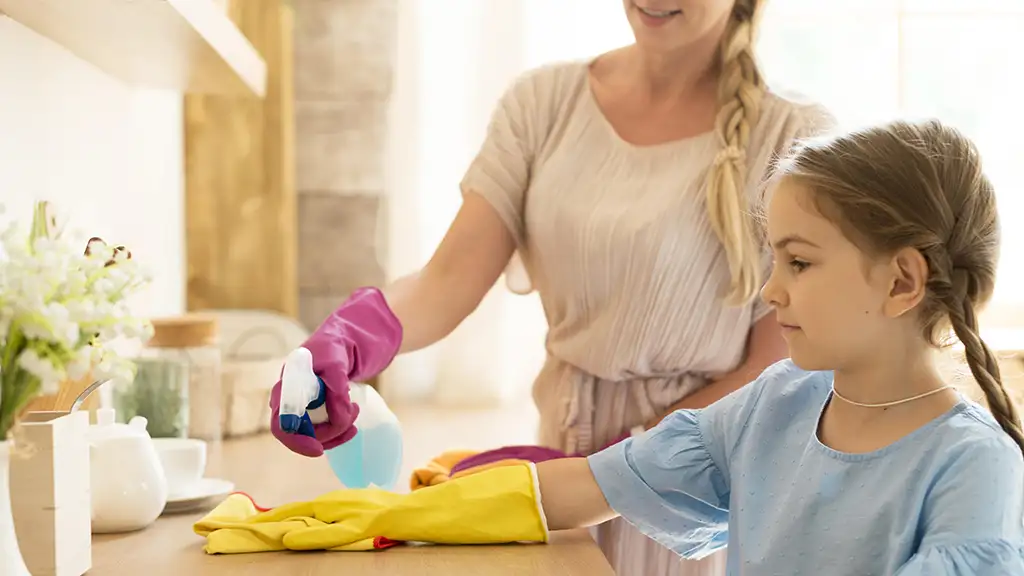
From a family systems perspective, shared responsibilities improve family functioning. Children who feel like active contributors are more likely to feel connected and valued within the family unit. This strengthens attachment relationships, which are critical for emotional security and long-term psychological wellbeing.
From a clinical family perspective, chores strengthen relationships.
· Children feel like valued contributors
· Improves family cohesion and cooperation
· Strengthens secure attachment and connection
Developing Work Ethic and Delayed Gratification
Chores also support the development of delayed gratification—a key concept in behavioural psychology. Children learn that effort leads to outcomes, even if the reward isn’t immediate. This builds persistence, motivation, and a strong internal work ethic.
Chores help children understand that effort comes before reward.
· Builds patience and impulse control
· Strengthens long-term motivation
· Linked to better academic and life outcomes
Final Thoughts
Chores aren’t just about helping parents—they’re a powerful developmental tool. From building executive functioning and emotional regulation to supporting mental health and family connection, the benefits are both practical and clinically significant.
Chores are more than just tasks—they are a practical, everyday intervention that supports:
· Cognitive development (executive functioning)
· Emotional wellbeing (regulation, resilience)
· Behavioural stability (routine, responsibility)
· Social development (connection, teamwork)
When children participate in chores consistently and with support, they build skills that directly contribute to long-term mental health and independence.
The key is to keep chores age-appropriate, consistent, and positively reinforced. When approached this way, everyday household tasks can become meaningful opportunities for growth, resilience, and lifelong wellbeing.
If you’d like to find out more about One Central Health, give us a call today on (08) 9344 1318.