
The Anatomy of a Meltdown: A Guide For When a Child’s System Crashes
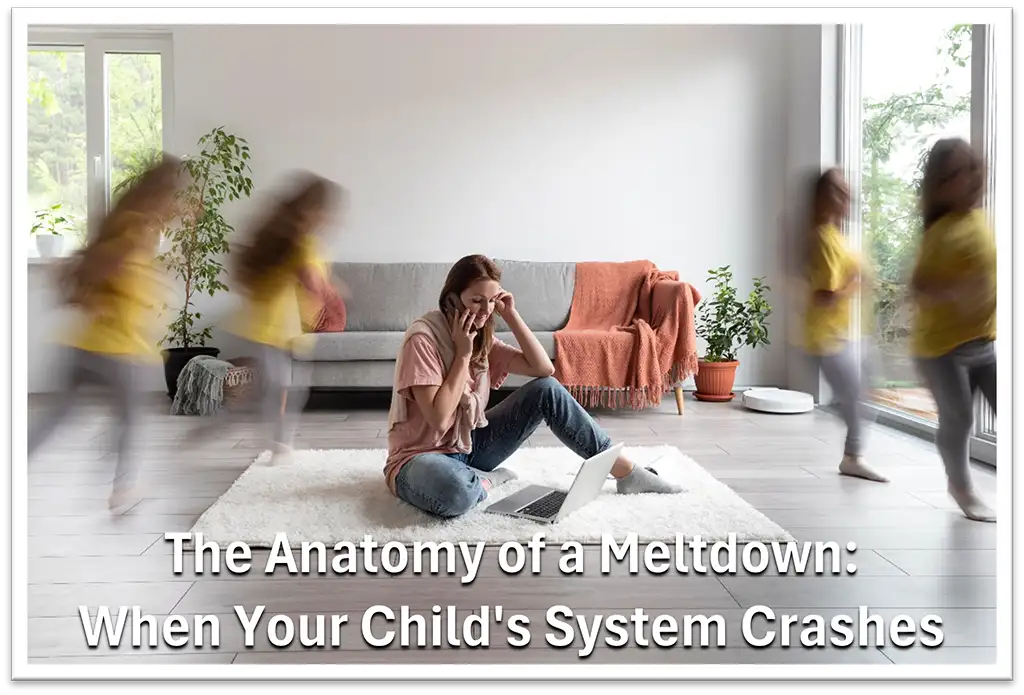
We have all seen it. Maybe it happened in the middle of a crowded grocery aisle, or perhaps it unfolded right in your own living room. A child—or even an adult—suddenly loses complete control. Tears stream, voices escalate, and logic completely flies out the window. In our culture, we often quick-label these moments as “tantrums” or “bad behaviour.” But most of the time, what you are actually witnessing is a meltdown.
While a tantrum is a goal-directed outburst aimed at getting a specific result (like a toy or a sweet treat), a meltdown is entirely different. It is a physical emergency where the nervous system gets completely overloaded and shuts down.
To help us understand, support, and navigate these intense moments, let’s look at the anatomy of a meltdown, broken down into its four distinct phases.
Phase 1: The Rumbling of a Meltdown (The Hidden Build-Up)
Think of this phase as a pot of water slowly coming to a boil. On the outside, everything might look relatively fine, but underneath, stressors are piling up. It could be scratchy clothing, a noisy room, hunger, or just a long day of trying to behave.
What to look for:
- Subtle shifts: Sudden fidgeting, pacing, or rocking.
- Quiet withdrawal: Putting a hood up, putting a head down, or simply going silent.
- Physical tension: Clenched fists, a stiff posture, or a tight jaw.
Parent tip: This is your golden window. If you notice these signs, change the environment immediately. Step outside, dim the lights, or take a quiet break before the pot boils over.
Phase 2: The Peak of a Meltdown (The System Overload)

When the stressors become too much, the brain hits its absolute limit. The logical part of the brain (the prefrontal cortex) completely shuts down. The emotional survival centre (the amygdala) takes over, launching the body into full fight, flight, or freeze mode.
What it looks like:
- Explosive release: Crying, screaming, stomping, or verbal outbursts.
- Physical flight: Trying to run away or hide in a corner.
- Total shutdown: Freezing up entirely and becoming completely unresponsive.
Parent tip: At this peak moment, words do not work because the logical brain is offline. Do not reason, lecture, or ask questions. Your only job right now is to keep them safe, stay close, and wait out the storm.
Phase 3: The Recovery (The Cooling Down)

Eventually, the intense rush of adrenaline begins to fade, and the storm passes. However, the body is still flooded with stress hormones. The nervous system is incredibly raw, fragile, and easily re-triggered.
What to look for:
- Deep sobbing: Slow, heavy crying as the tension releases.
- Physical shaking: The body physically processing the leftover adrenaline.
- Clinging: Reaching out for comfort and reassurance.
Parent tip: Keep your voice low and your demands zero. Offer a glass of water, a favourite blanket, or a quiet space. Hold off on talking about what happened until much later.
Phase 4: The Meltdown Hangover (Exhaustion and Healing)
A meltdown takes an immense physical toll. Once it is fully over, the individual enters what many call a “meltdown hangover.” They are completely drained.
What to look for:
- Deep fatigue: Extreme sleepiness or a total lack of energy.
- Vulnerability: Feelings of shame, guilt, or confusion about losing control.
Parent tip: Focus entirely on comfort and connection. Let them rest, sleep, or watch a comforting movie. Reassure them that they are safe and loved.
How to Help Prevent Meltdowns Before They Start
While you cannot stop every single meltdown, you can lower the frequency by building a more regulated environment. Here are a few daily habits to help keep your child’s nervous system balanced:
- Spot the triggers early: Keep a simple track of when meltdowns happen to identify patterns like hunger, fatigue, or loud noises.
- Build in quiet buffers: Create “downtime islands” throughout the day, especially after highly stimulating environments like school or birthday parties.
- Create a visual routine: Use visual schedules or checklists so your child always knows what transition or activity is coming next.
- Designate a safe space: Set up a quiet corner at home with comforting items like soft pillows, noise-cancelling headphones, or sensory toys.
- Practice co-regulation: Model calm behaviour yourself by taking deep breaths when you feel frustrated, as children mirror our nervous systems.
The Bottom Line
Meltdowns are not a sign of a bad kid or bad parenting. They are a sign of a completely exhausted nervous system. By learning to recognize the warning signs and understanding the cycle, we can move away from frustration and move toward compassion.
If you’d like to find out more about One Central Health, contact us today via our enquiry form or by calling (08) 9344 1318.
Disclosure: This article was written with the assistance of Ai. It is for general information purposes only, and not intended to replace professional advice. Please verify critical facts independently with a healthcare professional.
ALL Images Courtesy of FREEP!K/Magnific